
The Founder
Eli Shadab
Jeweler. Mystic. Keeper of rare things.
She does not design for the moment — she designs for inheritance. For the woman who enters a room without announcement, and leaves it changed.
Origin
Between gold markets and midnight film
Eli Shadab was raised between two worlds — the vaulted gold markets of her Persian heritage and the hushed ateliers of European craftsmanship. As a child, she watched her grandmother select stones by candlelight, holding each emerald to the flame as though listening for its voice.
Years later, in the silence of a Paris apartment, she understood what those evenings had taught her: luxury is not volume. It is restraint. It is the courage to let a single stone command an entire hand.
Shadab was founded not as a brand, but as a maison — a private world where jewelry feels inherited, tarot feels alive, and every object carries the weight of intention.
I did not set out to build a company. I set out to preserve a feeling — the moment a rare thing finds its rightful owner.
Persian Influence
Heritage woven into every setting
Persian culture does not separate adornment from meaning. Gold is protection. Emeralds are sovereignty. Symbols — the eye, the crescent, the lotus — are not decoration; they are language. Eli carries this inheritance into every piece, translating ancient iconography through a cinematic lens that feels unmistakably modern.
The language of gold
Warm champagne gold, brushed and mirror-polished — metal treated with the reverence Persian goldsmiths have practiced for centuries.
Symbols with intention
Every motif in the maison carries meaning: protection, intuition, renewal — never ornamental, always encoded.
The art of restraint
Persian luxury does not shout. It whispers — and those who understand, listen.
Jewelry Philosophy
Objects that feel inherited, not purchased
For Eli, jewelry is not accessory — it is archive. Each piece is conceived for the woman who wears rarity without performance: the collector who understands that true luxury lives in what is withheld, not displayed.
- Stones selected for depth, fire, and character — never for carat alone.
- Settings deliberately restrained, allowing emeralds to breathe and command.
- Forms drawn from Persian geometry, refined through European atelier precision.
- Pieces designed to be worn across decades — heirlooms from the moment of acquisition.
I design for the woman who does not need jewelry to be seen — she needs it to be felt.
Tarot & Spirituality
A private mythology, illustrated in gold
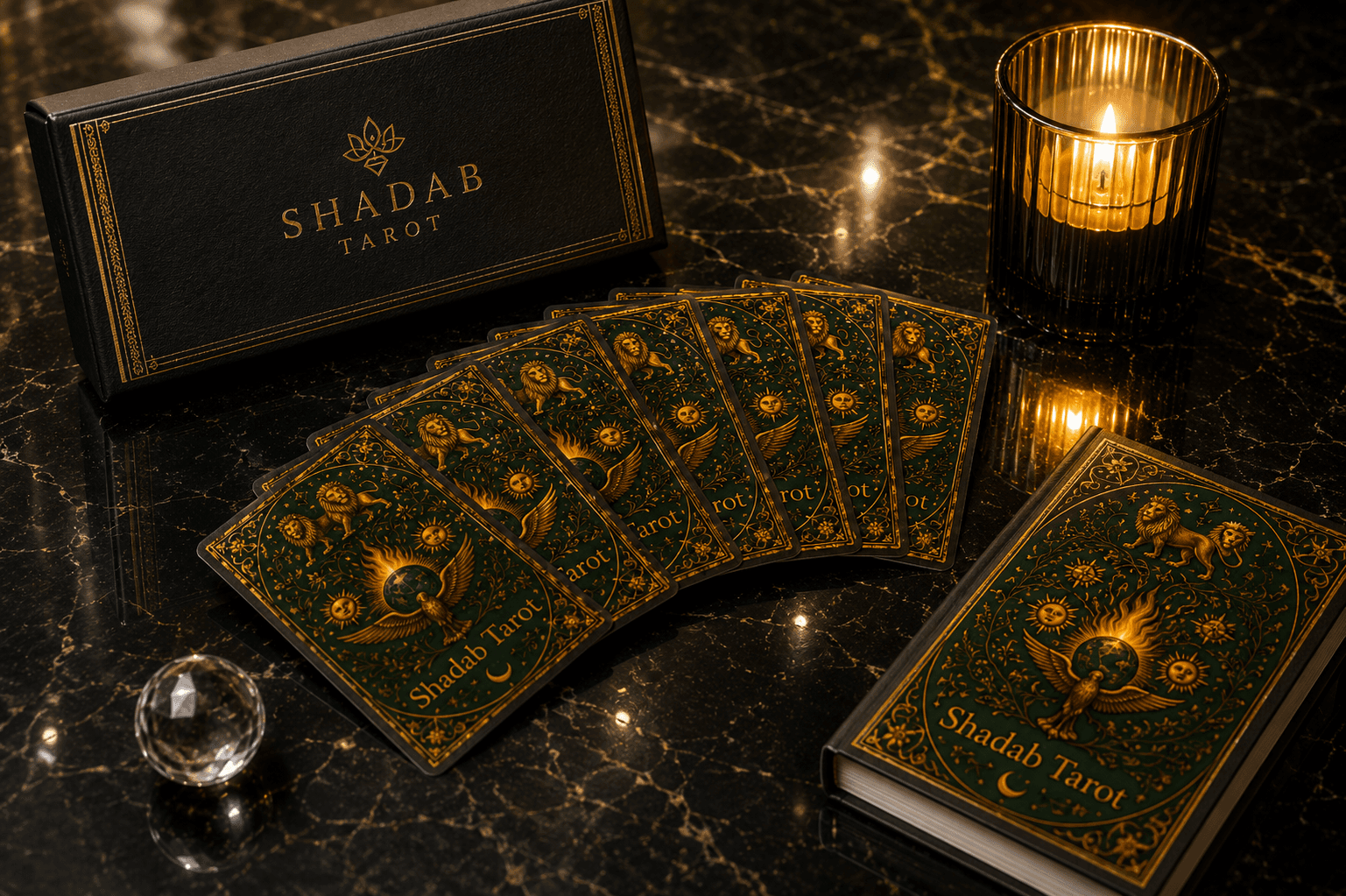
The Eli Shadab Tarot emerged from the same symbolic world as the jewelry — a deck for those who read between worlds. Eli does not treat tarot as fortune-telling; she treats it as a language of intuition, inherited wisdom, and the quiet courage to look inward.
- Seventy-eight cards conceived as portraits of symbolic power — gilded noir on archival stock.
- Persian mysticism reimagined through cinematic illustration — elegant, never ornamental.
- A companion guidebook written as a private lexicon, not a manual.
- Tarot and jewelry designed as companions — objects of devotion that share a mythology.
The deck is not about predicting the future. It is about honoring the wisdom you already carry.
Craftsmanship
Values held in the atelier
Every Shadab piece passes through hands that understand patience. Stones are hand-selected. Settings are hand-finished. Limited editions are numbered, documented, and never reproduced. This is not production — it is devotion.
Hand selection
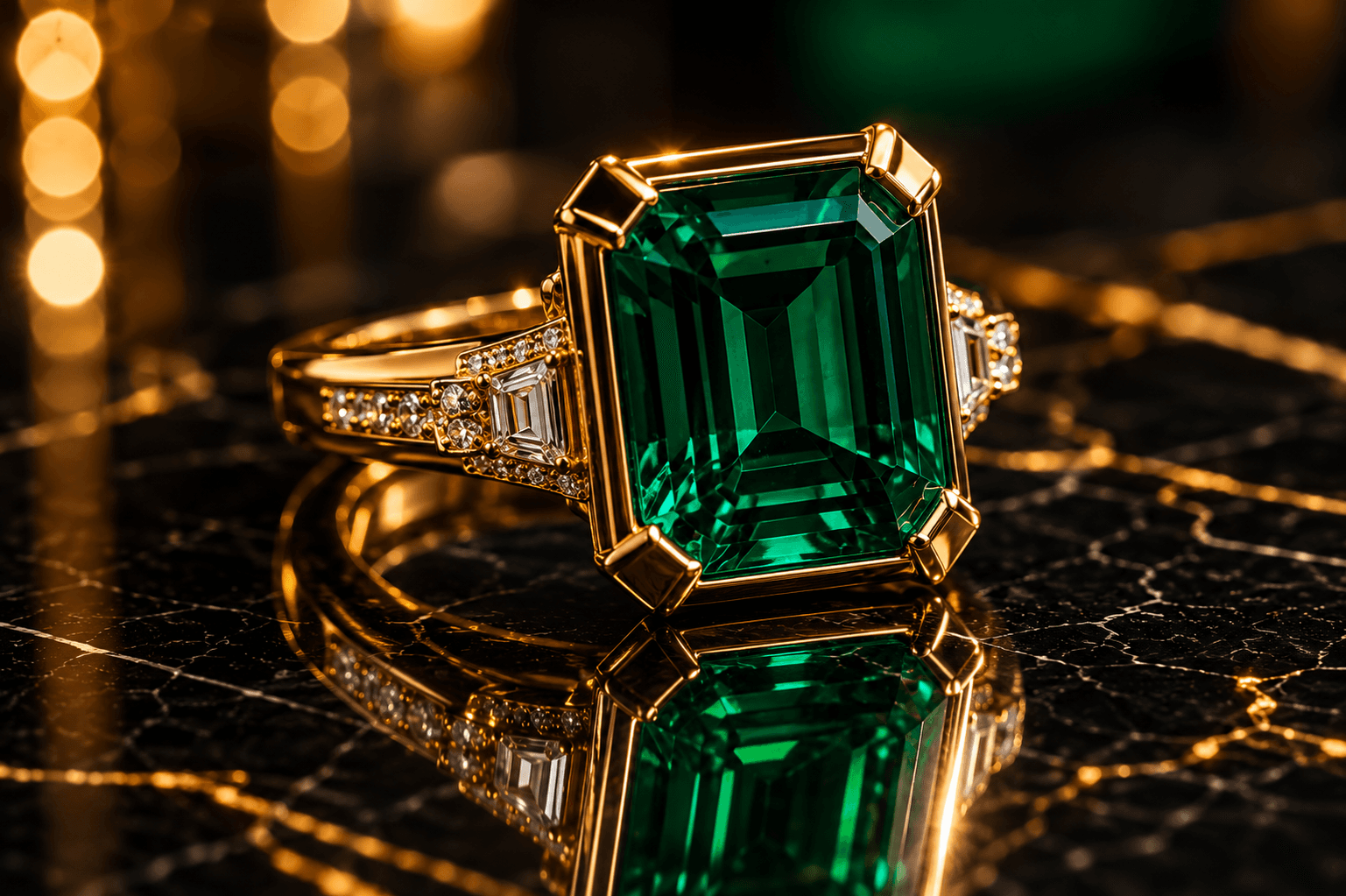
Each emerald chosen for its singular character — depth, fire, and an almost liquid green.
Atelier tradition
Persian goldsmith techniques merged with European precision — craft that honors both heritage and innovation.
Documented rarity
Limited pieces accompanied by certificates of provenance — objects whose stories are as rare as their materials.
Lifetime care
Every patron receives access to atelier maintenance — because heirlooms are meant to outlive us.
The Maison
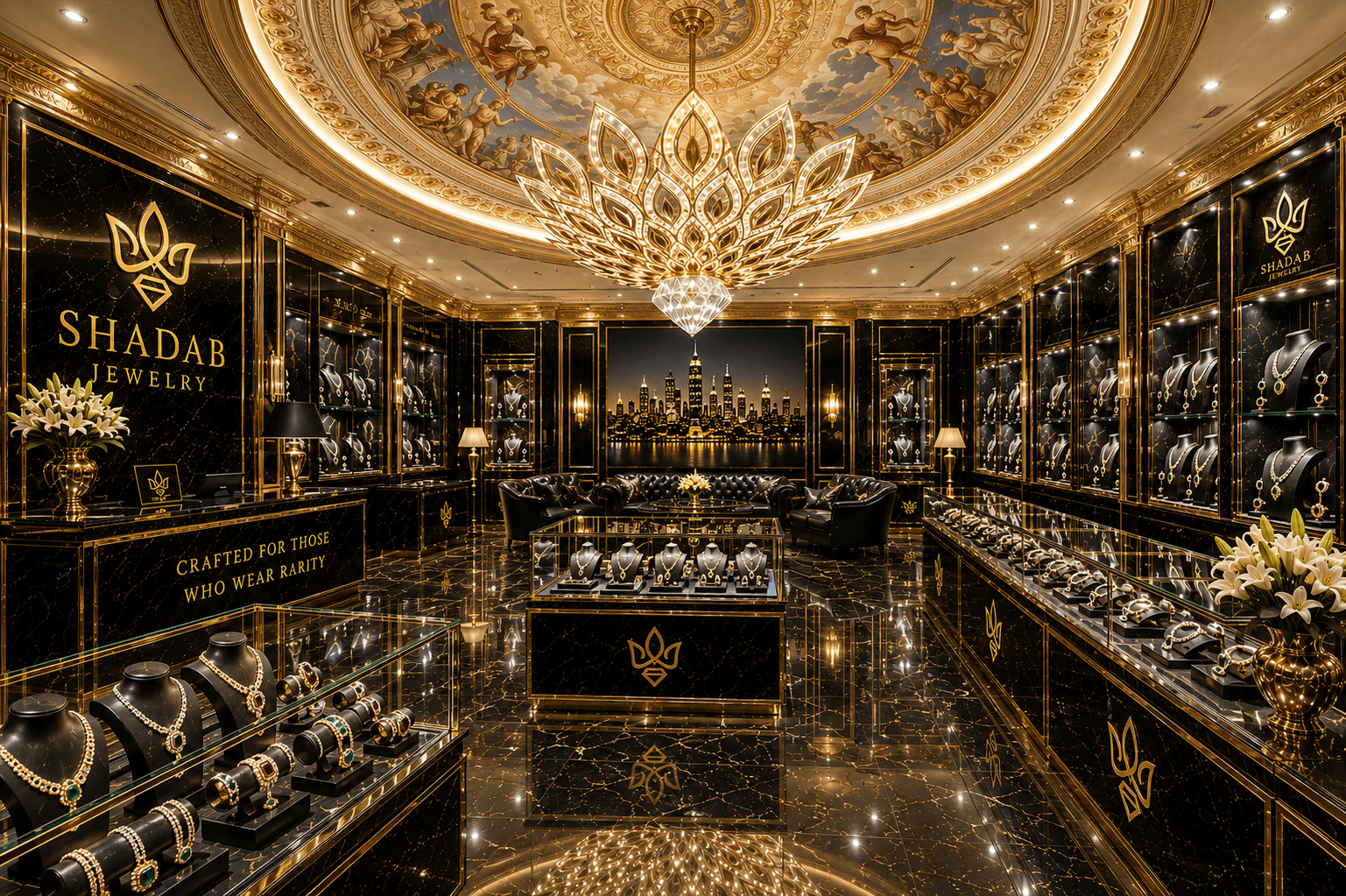
Shadab exists for those who wear rarity — who understand that the most powerful luxury is quiet, intentional, and eternal.